There was a time when brands wanted their social media to be perfect. Every image had to be perfect, every caption had to be spot on, and every piece of content had to be approved by five people. Some of the brands that are getting the most attention now are actually doing the opposite. They have chaotic, strange, overly online and nonsensical content that somehow manages to attract audiences.
This is where brainrot marketing comes in.
Brainrot is basically internet culture at its best. It is random, repetitive, ironic, nuts and very hard to explain to someone who isn’t online enough. However, brands are now using this language because it reflects how audiences consume social media. The audience is not going to Instagram or TikTok to see another beautifully put together brand post. They are going to scroll through memes, social content, trends, reactions, and conversations. A brand is competing for attention in the online space, not just against other brands. So, sometimes, being weird is a better way to get noticed.
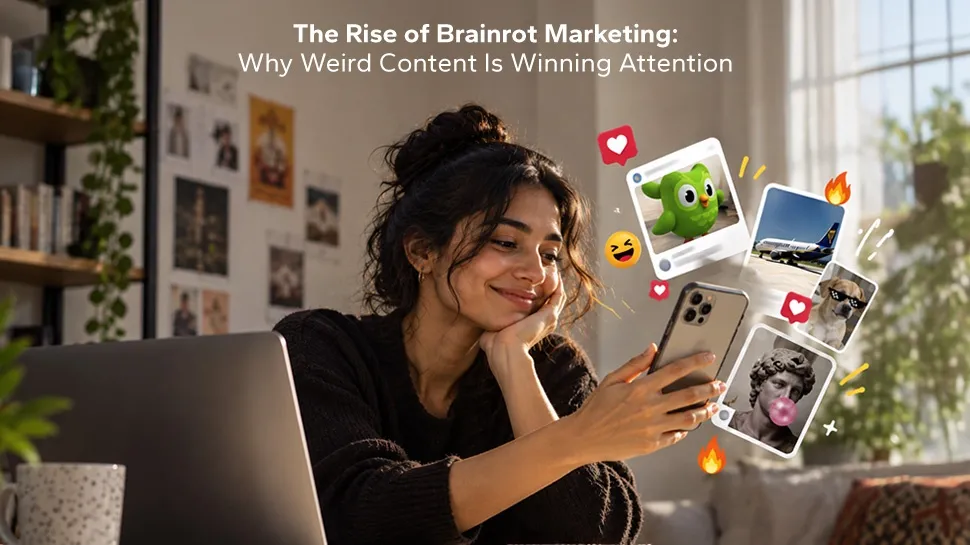
Duolingo is probably one of the most recognisable examples of this shift. Its social media doesn’t treat Duo as just a brand mascot. It treats him like an actual internet personality. Ryanair has built a similar identity through intentionally chaotic, low-production content that feels native to the platform. Nutter Butter has taken this even further, creating a strange and surreal social presence that feels more like an internet rabbit hole than a traditional brand feed.
What makes these brands interesting is not simply that they are posting weird content. It is that they have a personality, and building that personality at scale is increasingly a creator’s job, not just a copywriter’s. That’s the exact gap an influencer marketing agency is built to close: finding the right voices to carry a brand’s weirdness without it feeling forced.
And that is where brands need to be careful. Brainrot marketing does not mean randomly putting a meme on your Instagram page and calling it strategy. If every brand suddenly starts talking in slang, using absurd humour and posting deliberately bad graphics, the internet will simply move on to something else.
The real opportunity is understanding what makes your brand naturally interesting and then exaggerating that personality for social media.
A financial brand does not need to suddenly behave like a meme page. A beauty brand does not need to copy whatever trend is going viral that week. The content still needs to make sense for the brand and, more importantly, for the community it wants to speak to. That’s the job a good digital marketing agency actually does: finding what’s true about a brand before deciding how loud or weird it should get online.