Marketing has entered its IP era.
Every few months, brands come up with a fresh idea, launch a campaign, get people talking, and it trends for a little while before fizzling out.
But what happens if a brand makes something that people will talk about every year?
That is where a brand IP becomes essential to a company.
While intellectual property (IP) is legally defined as trademarks, copyrights, patents, etc., in marketer speak; it refers to something that a company creates and owns, and people can experience over and over again.
A brand IP could be an annual event or a podcast or a showrunners’ universe or a talent search or a community, etc. Unlike a campaign, an IP is a perpetual asset that grows with each iteration. Every year, it keeps getting better and more familiar.
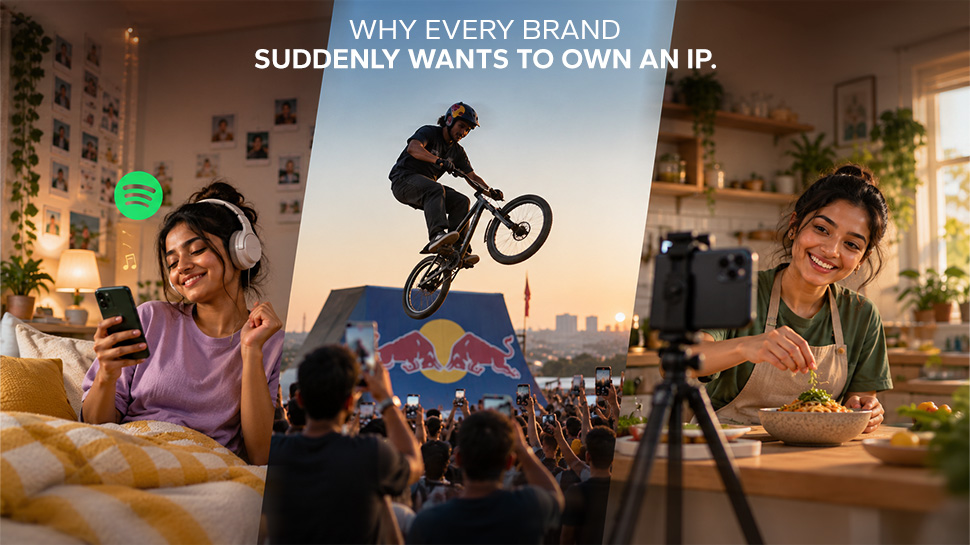
Every year, millions of Spotify Wrapped users look forward to seeing and sharing their Spotify Wrapped. It has become a brand IP that people actually associate themselves with. Similarly, Red Bull has an extreme sports adventure, while CRED, Zomato, and Swiggy have their own version of shows that run every year.
So, what’s happening here?
Consumers are hard to please these days. With multiple touchpoints and constant digital distractions, they have high expectations from brands. Campaigns are great but have a limited shelf life. They need new reasons to engage with the brand. IPs offer continuity to connect with consumers and allow brands to build recall better over time.
It has changed the dynamics between brands and influencers as well. Instead of working with creators on a one-off influencer marketing campaign, companies today want to partner with them on a long-term IP. The creator could be a host for the show or mentorship program, or a judge for a talent hunt or a face of the brand’s universe. Influencers are also realizing the importance of building creator-led IPs rather than one-sided brand promotion. The creator’s audience now has something to look forward to every year and not just a one-time CTA.
At the end of the day, a brand’s IP is an asset that people have come to know and love. It builds loyalty and hype around the launch of a new season of an influencer’s show or product.
As the creator economy evolves, the dynamics between brands and creators are changing as well. Instead of just promoting products, they’re building properties. Influencer marketing has come a long way from a creator posting a sponsored post. As brands increasingly bring together influencer marketing, content, social media, advertising and other channels, the need for an integrated marketing approach is becoming more important than ever. While it’s still vital, companies are realizing that they need to be more thoughtful about creating creator partnerships that will stick around much longer.
So here’s your reminder about influencer marketing:
As the creator economy continues to evolve, the role of influencers is shifting from simply amplifying campaigns to helping brands build properties that endure.
The question is no longer whether brands should invest in influencer marketing, it’s whether they’re using it to create something that lasts.
Who knows, your next influencer campaign could turn into your brand’s newest IP!