On 26 January, India marked its 77th Republic Day with a powerful display of its cultural diversity, economic momentum, and
defence capability. All phenomenal achievements that Indians can rightly be proud of. Fighter jets painted the skies, contingents
marched in precision, and the nation once again reflected on how far it has come since independence.
But today we’d like to draw your attention to a quieter, equally important story that lies behind, or perhaps even powers, these
achievements.
A story of builders.
Of entrepreneurs.
Of everyday problem-solvers who created opportunity where systems didn’t yet exist.
Because India’s progress hasn’t been driven only by policy and infrastructure. It has been shaped just as much by a uniquely
Indian instinct: jugaad.
It’s the same instinct we nurtured playing gully cricket- where broken bats, chalk lines for wickets, and borrowed tennis balls
turned empty streets into stadiums. That spirit of improvisation didn’t stay on the playground. Today, it’s quietly powering
boardrooms, startups, supply chains, and digital platforms across the country.
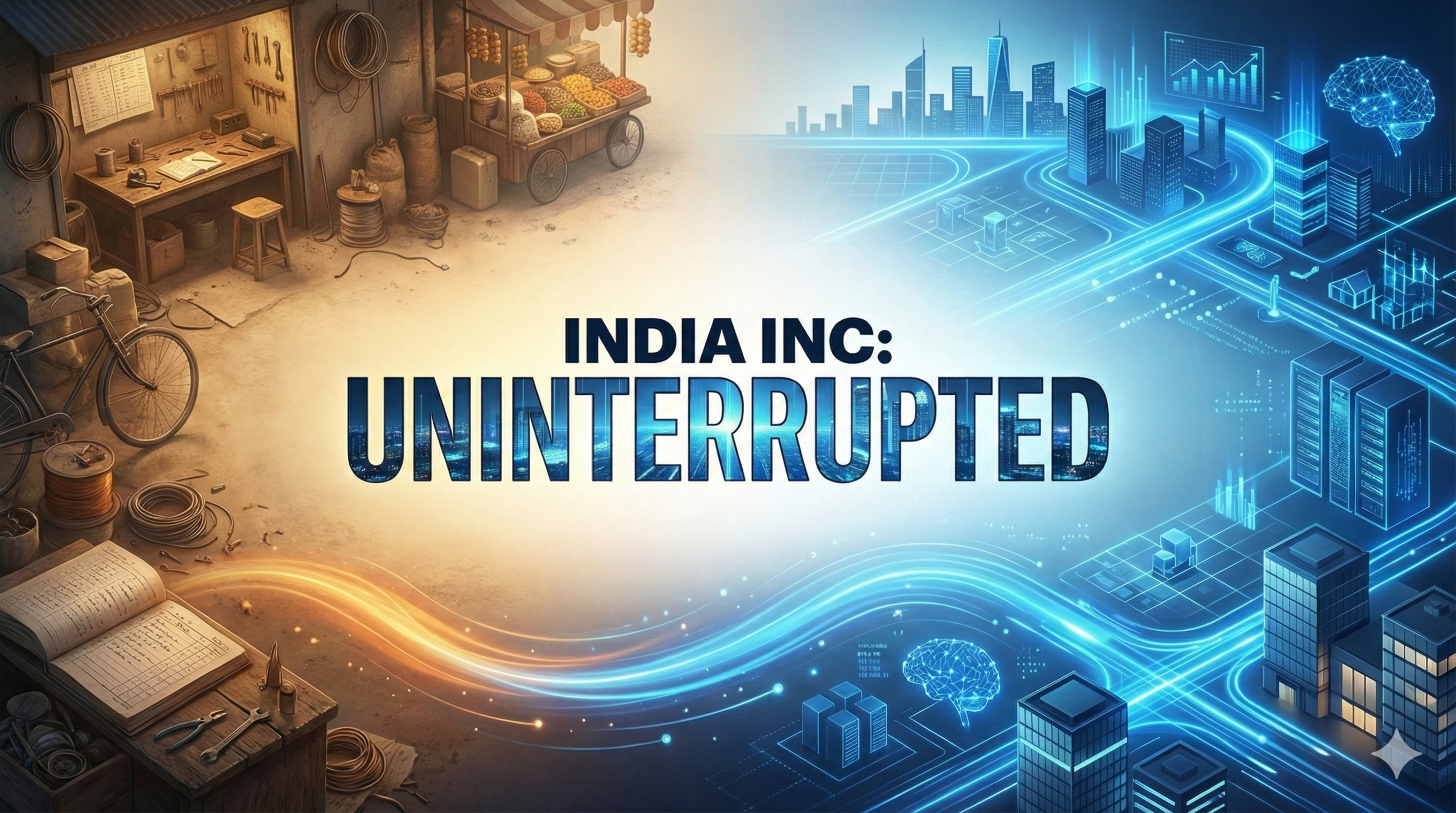
What started as improvisation under constraint has gradually evolved into a respected way of building businesses- one that
prioritizes adaptability, resilience, and practical innovation. And when you look closely at India’s most influential companies
and platforms, a clear pattern emerges:
What began as workaround thinking matured into scalable systems.
What started small became category-defining institutions.
What once solved survival problems now powers national growth.
This Republic Day (or the days after), it’s worth celebrating that transformation.
What Jugaad Really Means in Business
For decades, jugaad was casually dismissed as shortcut culture. Today, economists and business schools increasingly recognize
it as a form of frugal innovation– creating value in resource-constrained environments through creativity and operational
intelligence.
In the Indian business landscape, jugaad has typically taken two powerful forms:
- Operational Jugaad: Building efficient systems with limited capital and infrastructure
- Problem-Solving Jugaad: Creating solutions designed specifically for Indian realities
Together, these approaches didn’t just produce companies. They created ecosystems. Let’s look at some examples below.
Operational Jugaad: When Efficiency Became India’s Advantage
1. Amul: From Fighting Farmer Exploitation to National Supply Chain
Amul was born in 1946 when farmers in Gujarat faced unfair pricing from middlemen and lacked direct access to markets.
Instead of relying on external buyers, they formed a cooperative that eliminated intermediaries and gave producers ownership
over procurement, processing, and distribution.
What began as a grassroots organisation evolved into the Amul Model- a 3-tier cooperative structure that today connects
millions of farmers across India. This operational innovation helped trigger the White Revolution and turned India into the
world’s largest milk producer.
Amul didn’t just sell dairy products.
It built agricultural infrastructure.
2. Lijjat Papad: Scaling Livelihood Through Community Operations
In 1959, seven women started making papads with just ₹80 in capital. Without factories, advertising budgets, or modern
distribution, they created a decentralised production model powered by community participation and shared ownership.
Today, Lijjat is a national brand and a livelihood institution supporting tens of thousands of women entrepreneurs.
This wasn’t corporate scale built with capital. It was operational ingenuity built with trust.
3. Zoho: Building Global Software Without Venture Dependence
Zoho took an unconventional path in the software world. Instead of chasing venture funding or hypergrowth, it focused on
investing in Indian engineering talent (often by training promising young people from nearby villages), building profitable
products for the underserved SMB market, and maintaining long-term independence.
The result is a global SaaS company competing with international giants while remaining founder-led and bootstrapped.
In a funding-driven ecosystem, Zoho’s jugaad was choosing sustainability over spectacle.
4. Zerodha: Simplifying Finance for Everyday Investors
Zerodha began as a founder’s trading desk that simply wanted better tools and fair pricing. Without venture capital, it built
simple, transparent platforms for retail investors.
Today, Zerodha is India’s largest retail brokerage and has transformed how millions participate in financial markets.
In short, a personal pain point became an industry reset.
Solving for India: When Local Problems Created Global-Scale Platforms
Some of India’s most impactful innovations didn’t come from copying global models. They came from designing around uniquely
Indian challenges.
1. UPI: Rewriting How a Nation Makes Payments
India’s payment ecosystem once relied heavily on cash, with limited card penetration and fragmented banking transfers.
UPI changed this by enabling instant bank-to-bank payments using simple mobile identifiers and QR codes. It removed the need
for expensive hardware and bypassed legacy card infrastructure entirely.
Today, UPI forms the backbone of India’s digital economy and is the world’s largest real-time payments system by transaction
volume.
This wasn’t imitation. It was innovation in its truest sense.
2. Flipkart: Cash on Delivery as Trust Infrastructure
Early Indian e-commerce struggled with one major barrier: consumer trust. People were hesitant to prepay for products due to
two main reasons: (i) Online payments was still a foreign concept to most Indians (ii) They were unsure about product quality
and delivery reliability.
Flipkart’s introduction of Cash on Delivery solved this behavioural challenge by allowing customers to verify products before
payment. What began as a workaround quickly became the industry standard and accelerated nationwide adoption of online
shopping.
A simple idea became a category catalyst.
3. Zomato: Digitizing Food Discovery Before Delivery Was Normal
Zomato didn’t start as a delivery company. It began by solving a simpler problem: helping people discover restaurants and access
menus online when such information was scattered and offline.
Over time, that utility evolved into delivery infrastructure, restaurant partnerships, and nationwide logistics networks.
Zomato didn’t just respond to consumer behaviour. It helped shape it.
Bonus: Check out our Father’s Day 2024 Campaign for Zomato here.
4. Hero Group: Manufacturing From Scratch
Hero Cycles was founded at a time when India lacked indigenous bicycle manufacturing. Instead of depending on imports, the
Munjal brothers built production capabilities locally -tooling, fabrication, and supply chains- with minimal capital and
infrastructure.
That early manufacturing discipline scaled into global leadership in bicycles and later powered the rise of Hero MotoCorp, now
the world’s largest two-wheeler manufacturer.
From workshop improvisation to industrial dominance- a true Indian growth story.
Modern Jugaad: Creators, Personal Brands, and the New Economy
Today, jugaad looks different.
It’s no longer just factories and cooperatives.
It’s smartphones, social platforms, and digital communities.
India’s creator economy represents modern self-reliance in action:
- Individuals building businesses without physical infrastructure
- Personal brands evolving into product companies
- Creators launching courses, communities, D2C brands, and media ventures
- Millions generating income through digital platforms
What once required factories now often begins with content, consistency, and community.
Creators didn’t wait for opportunity. They engineered it.
At SocioClout, we have front row seats to this revolution as we help brands and creators build scalable growth engines using:
- Influencer ecosystems
- Performance-led creatives
- AI-powered content production
- Data-driven content strategies
Because the next phase of India’s growth story won’t just be built by large corporations.
It will be built by agile teams, digital entrepreneurs, and creators who turn attention into impact.
From rural cooperatives to fintech platforms.
From home kitchens to SaaS exports.
From factory floors to creator studios.
India’s real strength has never been perfect conditions.
It has been the ability to turn constraints into systems, ideas into institutions, and jugaad into juggernauts.
Happy 77th Republic Day, and here’s to building what’s next.